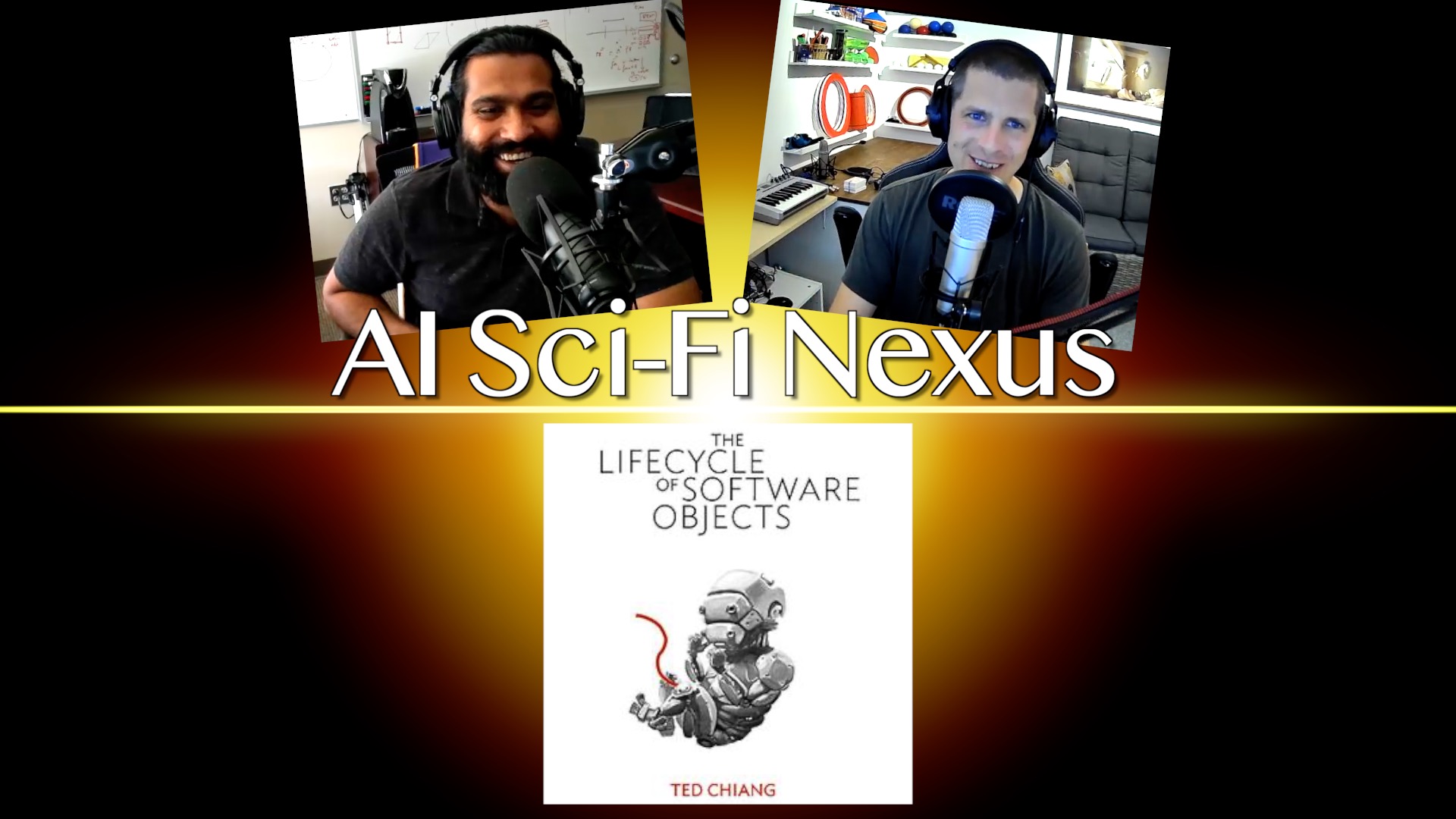
Sidd and Luke talk about why they picked the novella “The Lifecycle of Software Objects” as their first example of fictional artificial intelligence development, and propose some questions to keep in mind while reading the story.
Siddharth Krishnan, Assistant Professor at the Computer Science Department of University of North Carolina in Charlotte: https://webpages.uncc.edu/~skrish21/
“Luke and Juliane are back to chat books, comedy, and library apps. Everyone shares what they’ve been up to this summer, and we start accidentally sportscasting, and have to refocus on books. But we get there. Stay tuned to hear Jenny and Luke disagree about a book, and to hear Jenny talk about birds in Alaska. I admit I’m a bit out of practice with three people, so this episode is a bonus fifty percent longer than a normal episode. You’re welcome.”
The pilot episode of the show that gives Luke and Juliane, hosts of the SFBRP, a chance to share unbounded enthusaism about one thing, rant about another thing, and work through divided feelings about a third thing.
We’d love your feedback on this new project! Tweet: @lukeburrage and/or @jukuberlin
The SFFaudio Podcast #433 – Luke Burrage, Maissa, Julianne, and Jesse play Isaac Asimov’s SUPER QUIZ – because the game is 35 years old we used just four categorizes: “Geography”, “History”, “Science”, and “Words” (we left out “Movies” and “Sports”).
This is boardless tabletop game was invented by Ken Fisher in 1982, and was followed by two sequels (Isaac Asimov’s SUPER QUIZ II and Isaac Asimov’s SUPER QUIZ III), it still sees regular publication as a featured column in a United States based newspaper chain.
Talked about on today’s show:
what we’ve been listening to lately, a long time, mostly SFFaudio has been a Philip K. Dick podcast lately, fun, picking and choosing, the Philip K. Dick Rhetorizer, motifs and phrases, writerly tics, a TV Tropes for Philip K. Dick, the Wub, Nick And The Glimmung, Galactic Pot Healer, its like telepathy, how many of the short stories, Second Variety (Screamers), kind of monster(y), Jon’s World, Screamers: The Hunting, a break from Philip K. Dick, will we have a PKD wrap up show?, the Best of Philip K. Dick, listen to all of them?, good fun, Hugula Award winners (winners of both Hugos and Nebulas), Alastair Reynolds, The Doomsday Book by Connie Willis, The Writing On The Wall: Social Media – The First 2,000 Years by Tom Standage, graffiti, slaves copying newsletters, an absence of copyright, the 17th century, The Economist, how technology and history intersect, A History Of The World In Six Glasses, The Victorian Internet, full of enlightening history, when the post is delivered 25 times a day, non-fiction, Jared Diamond, educational = entertaining, Simon Vance, We by Yevgeny Zamyatin, Nineteen-Eighty Four, Brave New World, Aldous Huxley, Brave New World Revisted, early versions, Eric S. Rabkin, Jenny Colvin, what it’s like to live in a world without privacy, scheduled sex, 2011, quitting or pausing an audible.com account, always be listening, listening at the gym, get short books, how many Jesses is that?, The Martian Chronicles, reading contest, how many centimeters of books have you read, reading comics, finishing good books feels awesome, listen in the shower, podcasts are better at the gym (or places of higher distraction), reading by language, reading in translation, short and interesting is hard, Pandora’s Star, Otherland, phone in the toilet, plopped, the waterpoof iPhone 7, the Sony ICF-CS15iPN Personal Audio System (“DREAM MACHINE”) (does not work with iPhone 6 or iPhone 7), Jesse is well groomed, it’s time to shave, doing housework, the TVs in a gym, imaging your own dialogue and soundtrack, Pavane by Keith Roberts, Jenny’s Reading Envy podcast, Redemption Ark, an anthropomorphic kangaroo, East German assimilation into West Germany, The Kangaroo Chronicles by Marc-Uwe Kling, before bed laughter, ending the day in a good mood, audio drama before sleep, audio drama is television (or movies) without a picture, The Monster Hunters, werewolves and Draculas, movie associations, dense with material, Die Drei Fragezeichen (the three question marks) aka The Three Investigators, Alfred Hitchcock, set in California but done in German, the Perry Rhodan of audio drama, John Sinclair, Who Fears Death by Nnedi Okorafor, “structural” storytelling, The Most Powerful Idea In The World: A Story of Steam, Industry, and Invention by William Rosen, steam engines, patents, The Third Horseman: Climate Change And The Great Famine Of The 14th Century, name and place-name pronunciation, 14th century weather, how hungry were the people?, Ireland, eating what’s left in your ancestors skulls, a record of the famine, volcanic eruptions, 1816 (the year without a summer), Switzerland, Krakatoa, pendulum oscillation, unseasonably awesome summers for 400 years, Greenland, Mount Tambora, Updraft by Fran Wilde, A Deepness In The Sky by Vernor Vinge, The Bone Clocks by David Mitchell, Kill Or Be Killed by Ed Brubaker and Sean Phillips, Criminal, Fatale, period crime, superheroey or supervilliany, real demon vs. brain tumor demon, Westworld, Hard Case Crime comics (Titan Comics), Peepland and Tirggerman, Christa Faust, MMA or UFC, the Snakes On A Plane novelization, Money Shot, the print death spiral, the difference between graphic novels and comics, floppies, “trades” = “trade paperbacks”, Saga by Brian K. Vaughn, IDW, Archangel by William Gibson, time travel to WWII into a copy of our universe, why the half-naked woman on the cover?, naked people (not men), women in comics have massive boobs, the medium of comics developed out of the turn of the 19th and 20th century “physical culture” movement, in Saga you never think it’s too much, sex, an orgy planet, Hard Case Crime covers have women as part of the iconography, owning slaves as titillation?, Cinema Purgatorio, Alan Moore, Garth Ennis, Max Brooks, very meta, the history of cinema, through the lens of the Marx Brothers, Code Pru, World War Z, A More Perfect Union, the Kickstarter for Cinema Purgatorio, Jessica Jones, Daredevil, Luke Cage, Aftershock Comics, Dreaming Eagles, Stephen Spielberg’s Red Tails, Simon Coleby, Francesco Francavilla, WWII, war comics, Eric S. Rabkin, Battlefields: The Night Witches, we need a Nacht Hexen movie!, Harry Turtledove, SPQR by John Maddox Roberts, historical criminal fiction, Elizabeth Peters’ Amelia Peabody series, Scooby Doo, The Mummy and Indiana Jones mixed together, books people would like to see Luke review, Alastair Reynold’s Revenger, rant episodes, nightmare licensing, 10 books for £1 million (in 10 years), do we prefer early books or later books by authors?, Century Rain, Robert J. Sawyer, Golden Fleece, remember enjoying Jerry Pournelle and Larry Niven books, setting aside sexist and racist material, Jesse defends Larry Niven, Iain M. Banks, Hominids, reading for ideas, Replay by Ken Grimwood, The First Fifteen Lives Of Harry August, Minding Tomorrow by Luke Burrage, recommended many times.
The SFFaudio Podcast #369 – Jesse and Juliane Kunzendorf discuss The First Men In The Moon by H.G. Wells.
Talked about on today’s show:
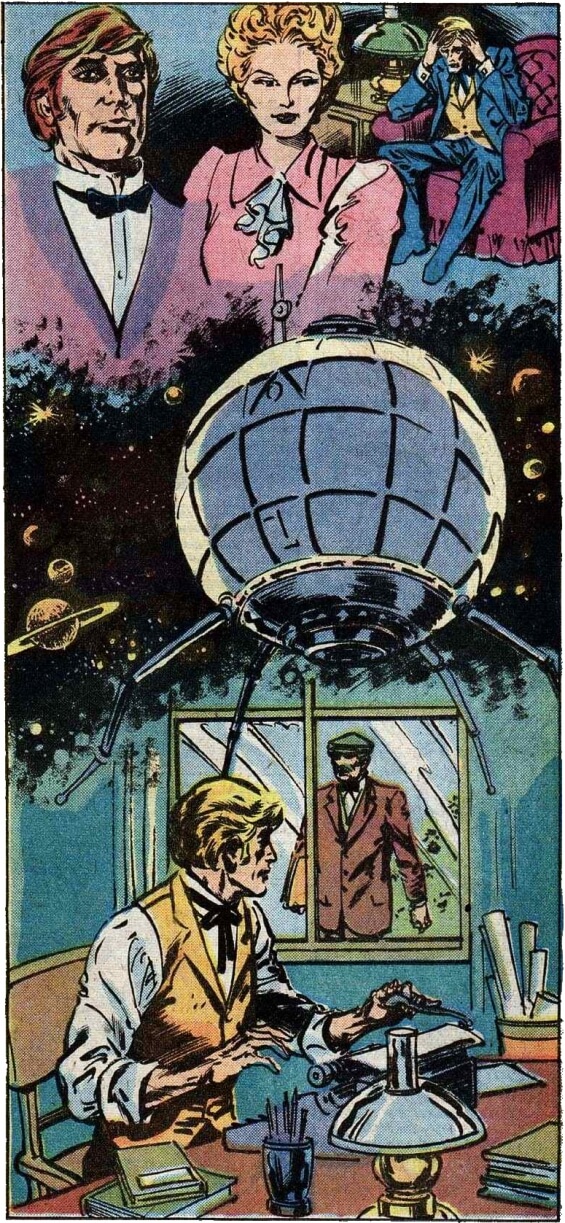
1900, 1901, dystopia, Looking Backward by Edward Bellamy, The Sleeper Awakes, “on the moon” vs. “in the moon”, Neil Armstrong and Buzz Aldrin, the 1964 movie, the framing story, a multinational crew, technical issues, the 2010 adaptation, putting a frame around the story, a Moon Landing fair, a grumpy old man, a kinematoscope, the “real” first Moon landing, Bedford, differences, no plants on the Moon, drugged up, introducing a woman, men acting stupid, a comedy, how Bedford and Cavor meet, passive aggressive, the three workman, almost comedic, a sinister undertone, The War Of The Worlds in reverse, a disappointing ending for the movie, a really strong ending for the book, to make it a family movie, light and amusing vs sinister and serious, coming from Elizabeth Moon’s Trading In Danger, Wells’ language, The Invisible Man, explaining some scientific principle, analogies, maybe there is something like cavorite, the detection of gravitational waves, glass, bromine solution, transparent to gravity, a dodecahedron, a glass sphere, louvered blinds of cavorite, at the bottom of an ocean of air, shooting all of the Earth’s atmosphere into space, genius, genius!, flying to the Moon, the spaceship as an eye, driving school, always look where you want to go, how eyes work, why the movies have been forgotten, the last transmission, the 2010 movie ending, symmetry, what Wells is saying with this book, the last word, ambiguity, the loneliness of humanity, lost, he’s not his identity, what Cavor is doing in those transmissions, utopia/dystopia, wrestling with our purpose as human beings on the surface of the Earth, one definition of work: activity on or near the Earth’s surface, astronauts and miners, the great mind, hive mind, so much Science Fiction afterwards, how life works, ants, on the topic of war, Bedford is the classical monster character, The Country Of The Blind, crystallized in the 1964 movie, hiding from his debts, Blake, once you start suspecting this guy, some of that story is true, putting a good spin on it, subtlety, gold chains, the Selenite’s head broke just like an eggshell, turning the moon into another colony, the whole history of humanity, fighting over useless things, a mirror in front of humanity, the Native Americans, scientific naivety, are we gonna reform our ways?, WWI, giving ultimatums, honor, respect to warriors, (in vino veritas), the surplus population, later SF, Brave New World by Aldous Huxley, the latter half of this book, the brain, the dictionary, the one who likes to draw, one who is really good at metaphor, off in lala land thinking lala thoughts, the communication specialist, the one who knows all the stuff, the illustrations, the alphas the betas the gammas the deltas, the three worker specialists, the joiner, the earth worker, the metal worker, the name Cavor – caver?, it sounds good, caver vs. cavor, the Lord Bedford, claiming the Moon for the Queen, the BBC audio drama, a very serious book, the Mooncalves, the word “mooncalf”, “abortive fetus of a cow or other farm animal”, all sorts of resonances, a scene that makes vegetarians, the reading material that Bedord brings: TidBits (magazine), selling fishknives, Cavor brings the complete works of William Shakespeare, another connection to Brave New World, The Tempest, a story of colonialism, the only native occupant is Caliban, he’s funny and wise in his untutored way, one of the insults that Prospero throws at , the title of Brave New World, an ironic usage, the one slip-up that Wells mad that Huxley picks-up, Bedford’s play, it would work as a play, act 1, act 2, act 3, the flight as an interlude, trying to find the sphere again, two hours left to go?, another interlude in space, an epilogue, how you would stage it, the gold that he brings back from the Moon, living in Italy, published in The Strand, very meta, you can really see the staging, Cosmopolitan, November 1900 first then The Strand, December 1900, serialized as he wrote it, the end of the Cosmopolitan serialization, an elaborate suicide, a dream, Moon gold, a most extraordinary communication, alive in the Moon, is he hoaxing me here?, The War Of The World radio drama, how the spaceship disappears, the boy who disappears into space, Bedford In Infinite Space, at least 10 days, something weird about time, Einsteinian relativity, time works differently when you travel, criticism of this book, C.S. Lewis’ objections, one world government, new world order, a fascistic totalitarian society, lets look at this, other writers do their own version, a sign of a good book, taking the essence, other interpretations, audio drama as a soporific, two dreams, dreaming the ending of The First Men In The Moon, that’s exactly what happened!, my unconscious or semi-consciousness heard it, such a great ending, left for dead, did Bedford feel guilty for leaving Cavor on the Moon?, not the kind of person to have self-doubts, not very charitable, how it actually went, the best possible spin, this is just the way he is as a human, humans are terrible, his nature, Jesse’s secret, The War Of The Worlds, one of Juliane’s first SF books, the illustrations, reading it with the old serialized magazines, chapter endings, what a great end, did Wells have an influence on the illustrations, how adaptations will always take away the plants on the Moon, The Lost World by Sir Arthur Conan Doyle, seeing dinosaurs with skin, a resultant mistake, dinosaurs in popular culture arent shown with feathers, Jurassic Park and Jurassic World, a false picture of the reality, we’ll never be able to get passed this point, daylight savings time, were stuck unable to shift out of a system that doesn’t work, we’re stuck, were stuck with war, when Bedford is completely alone he loses his particular niche, if you zoom out, we’re nothing, what are we that we have to fight each other, we’re all stuck here with gravity, why those interludes are so important to the book.
I was a guest on Jenny’s Reading Envy podcast. We had a lot of fun, talking about non-fiction “left for dead” book choices inspired by the recent release of the Martian movie, memoirs and memories, and stories of the stories of science fiction.
Related Episodes: Episode 017 – Homeric Radiation at Lake Inverness with guest Luke Burrage Episode 032 – Her Smoke Rose Up Forever with Luke Burrage, crosspost with SFBRP podcast